5 Design Mistakes That Make Luxury Homes Look Dated, Even After a Renovation
- Nov 11, 2025
- 4 min read
Even luxury homes can look dated if they focus on current trends rather than architectural integrity. In this guide, Burlington Interior Designer Ana Castanheira outlines the 5 most common mistakes, from over-lighting to using low-quality materials, and how to ensure your home renovation adds value that lasts.
Scrolling through Realtor.com lately, I can’t help but cringe at the number of “renovated” luxury homes that somehow still look dated. The intention is good: to attract buyers or freshen up a long-owned property. However, the execution often misses the mark. True luxury design is timeless, not trendy.
After years of working with clients on full-home renovations and custom builds in Burlington, Oakville, and surrounding areas, I’ve seen what works and what absolutely doesn’t.
Here are five design mistakes that make even high-end homes look dated, and how to avoid them.
How can I use trends without making my home look dated?
It’s tempting to incorporate the latest trends into your home: black-framed windows, chevron floors, brass hardware, shiplap walls… sometimes all in one space. The result? A Pinterest board exploded, and your home suddenly feels chaotic and short-lived.
Luxury thrives on restraint and cohesion. Trends should complement a strong design foundation, not dominate it.
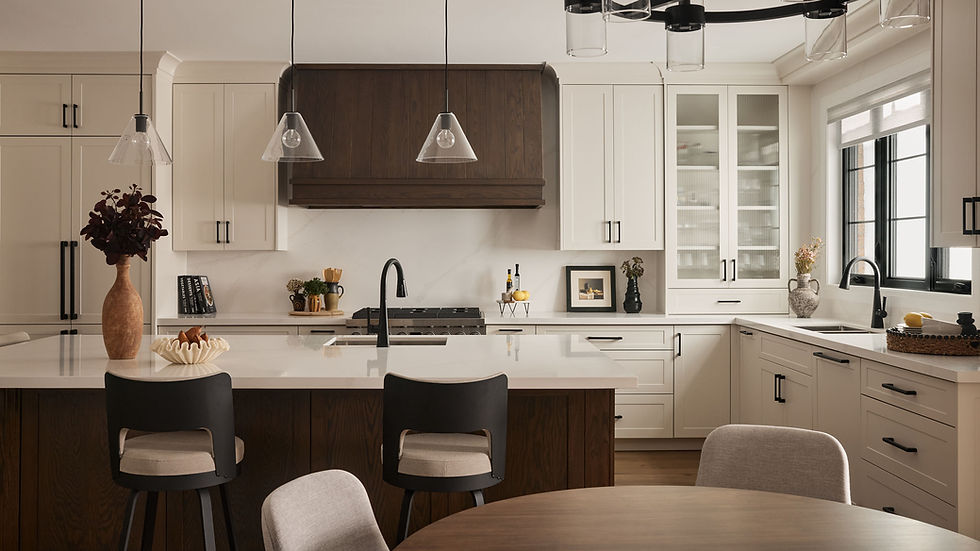
How to fix it: Choose one design direction and interpret it through high-quality materials and finishes. As a designer, I curate trends so your home feels fresh yet timeless, never like it was decorated on impulse. For example, in this Burlington kitchen renovation, we paired a classic kitchen layout with a single trend-forward element, the walnut-stained island, then added a subtle ribbed glass detail on one cabinet door, keeping the space grounded and elegant.
What materials should I invest in for my home renovation?
I see it all the time: poorly made faux marble countertops, laminate floors in weird colours pretending to be wood, or shiny brass-look faucets that tarnish within months. These shortcuts might pass on a listing photo, but in person, the difference is glaring. Luxury isn’t just about spending money; it’s about authenticity.
How to fix it: Invest in genuine materials where it counts. A few authentic details like real marble, solid wood cabinetry, vintage bronze, or unlacquered brass fixtures will elevate the entire space and create a lasting impression.
Think of it as “quiet luxury”: understated yet unmistakably high-end.

How should I design with the architecture of my home?
Some renovations completely erase what made the home special in the first place. Over-modernizing a classic Tudor or applying farmhouse décor to a 90s brick estate often backfires. The result? Spaces that feel off-balance, forced, or trend-chasing rather than thoughtful.
How to fix it: Work with the home’s bones. Respect proportions, structural features, and original charm. Modernize through thoughtful interventions, like opening up a kitchen to the dining room, adding strategic lighting, or selecting finishes that complement the existing architecture. This approach keeps your home feeling grounded and enduringly stylish.

What is the right way to light my home?
Lighting can make or break a space. I’ve walked into homes with ceilings studded with recessed pot lights, bright white LEDs, and poorly sized chandeliers, all competing for attention. The result is flat, cold, and anything but luxurious.
How to fix it: Think in layers. Combine architectural lighting (strategic recessed lights) with decorative fixtures (chandeliers, sconces) and ambient sources (lamps, cove lighting). Warmth, shadows, and subtle highlights bring texture and depth to a space, making it feel truly expensive. A well-lit home invites people in; it doesn’t overwhelm them.

How can I make my interior design unique and personal?
Many homeowners stick to shades of gray, beige, or white to “appeal to buyers” or to avoid committing to colour. The problem? Safe choices often feel generic, like a spec home rather than a thoughtfully designed luxury residence.
How to fix it: Luxury design requires confidence. Introduce richer tones, layered textures, or one standout element like a statement fireplace, a custom island, or an artful wall finish. When executed with intention, a bold move enhances sophistication rather than dates it.

The Importance of Timeless Design
Timeless design is essential for creating a home that feels luxurious and inviting. It goes beyond trends and focuses on creating spaces that resonate with the inhabitants and their lifestyle.
Understanding Timelessness
Timeless design is about creating a balance between aesthetics and functionality. It’s about selecting pieces that will not only look good today but will also stand the test of time. This means choosing materials, colours, and designs that are classic and enduring.
Choosing the Right Materials
When selecting materials, consider their longevity and how they will age over time. Natural materials like wood, stone, and metal often age beautifully, adding character to your home. Opting for high-quality finishes will ensure your home remains elegant for years to come.
Creating Cohesive Spaces
A cohesive design throughout your home creates a sense of harmony. This doesn’t mean every room must look identical, but there should be a common thread that ties the spaces together. This could be a consistent colour palette, similar materials, or a recurring design element.
Closing Thoughts - Avoid Renovation Regrets
Luxury isn’t about spending more; it’s about making considered design decisions that stand the test of time. When I work with clients on renovations or new builds, we look beyond quick fixes to create homes that feel sophisticated today and timeless ten years from now.
If you’re considering a renovation in Burlington, Oakville, or the surrounding area and want to ensure every decision elevates your home's value and beauty, let’s connect.
Click here to book a discovery call today.


Comments